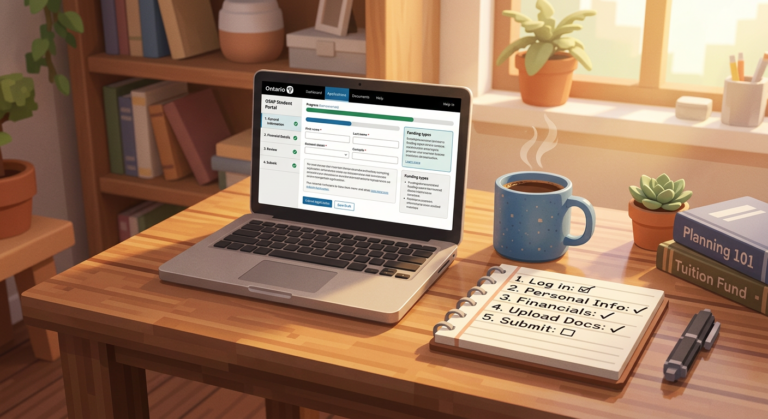
Last year, a single mother came to my office in tears. She’d enrolled at a private career college three weeks earlier — a medical office assistant program, $13,500 in tuition — signed the enrolment contract, and submitted her OSAP application. Then the funding decision came back: denied. The school wasn’t actually OSAP approved for that program. She was on the hook for the full amount, and the 2-day cooling-off window had long since closed.
I wish I could say her story is rare. It isn’t.
I’ve spent years helping adults — single parents, newcomers to Canada, people switching careers — navigate OSAP and find legitimate programs at private career colleges. I’ve watched people make the exact same mistakes, in the exact same order, for the exact same reasons. And the common thread is always the same: they trusted what they were told instead of verifying what was true.
The good news is that protecting yourself doesn’t take weeks of research. It takes five checks and about an hour of your time. Here’s everything you need to know — and exactly what to say — before you sign anything.
Table of Contents
- What “OSAP Approved” Actually Means
- Why Verifying a School Matters More Than Ever in 2026
- 5 Insider Checks Before You Enrol at Any OSAP Approved School
- Exactly What to Say When You Call Admissions
- 5 Mistakes That Cost Students Years and Thousands
- FAQ: OSAP Approved Schools
- Final Thoughts: You Shouldn’t Have to Be the Detective
What “OSAP Approved” Actually Means
When a school is OSAP approved, the Ontario Ministry of Colleges and Universities has designated that institution as eligible for the Ontario Student Assistance Program. Students enrolled there can apply for OSAP funding — a mix of loans and, historically, grants — to cover tuition and living costs.
But here’s the distinction most people don’t learn until it’s too late: OSAP approval is not a quality guarantee. It means the institution meets the minimum requirements to participate in the student aid program. It does not mean strong job placement. It does not mean good instruction. And it does not even mean that every program at that school is covered.
I’ve seen schools that were OSAP approved for their nursing program but not their business program — and the business students only found out after their funding was denied. A school can be in the system while individual programs are not. If you enrol in a non-designated program, you won’t receive a dime, even if the school’s name shows up when you search.
Why Verifying a School Matters More Than Ever in 2026
If you’re a single mother, a newcomer to Canada, or an adult going back to school after years away, the stakes are higher for you than for the average 18-year-old university applicant. You probably don’t have a financial safety net. You can’t afford to lose two years and $15,000 on a program that doesn’t get you hired.
The numbers from the Higher Education Quality Council of Ontario confirm what I’ve seen firsthand:
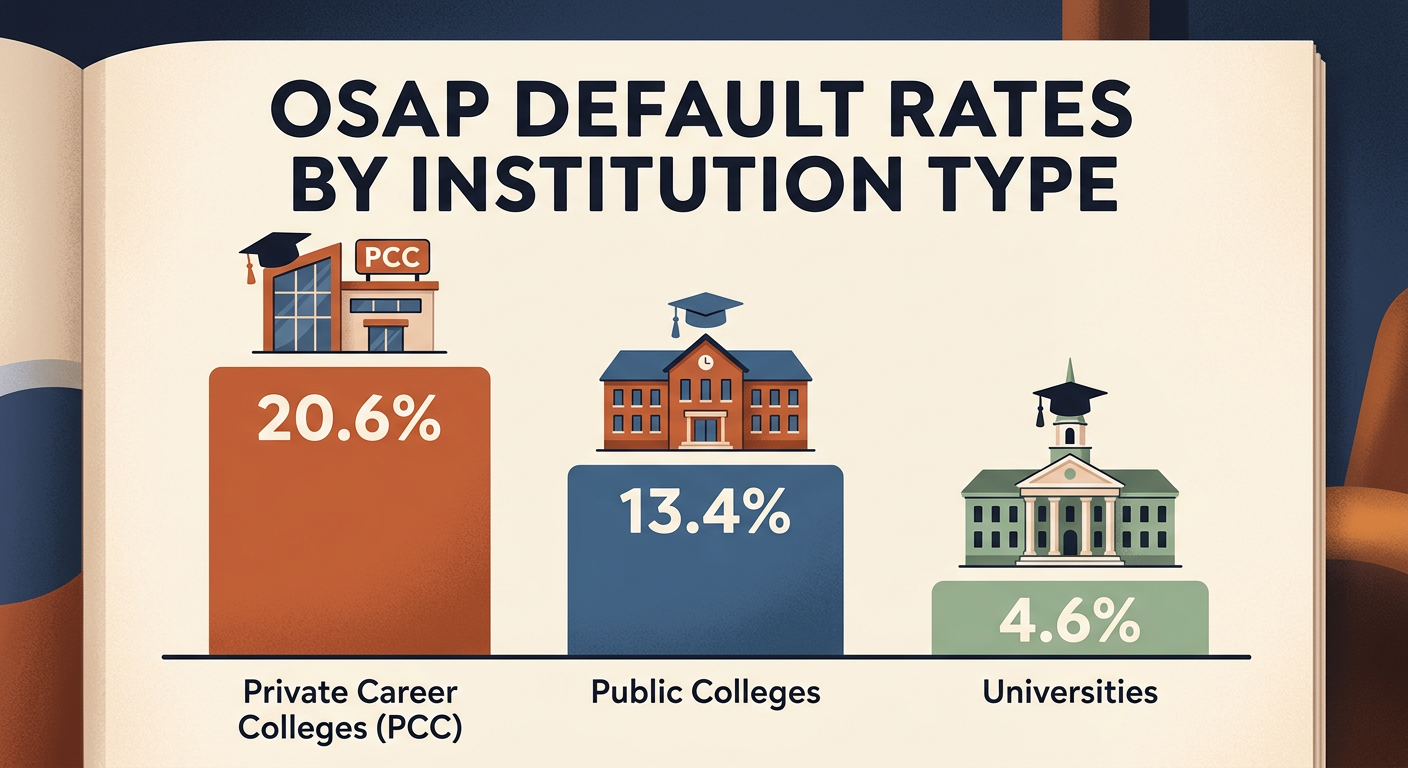
- OSAP loan default rate at private career colleges: 20.6%. At universities, it’s 4.6%. At some individual PCCs, the numbers are staggering — Academy of Learning in Barrie hit 58.3%. That means nearly 6 in 10 graduates couldn’t pay back their loans.
- Average salary for PCC graduates: roughly $26,000 per year. Public college graduates average $34,000. University graduates average $42,000.
- Only 62% of PCC graduates were satisfied with their education. That’s 20 percentage points below public college graduates.
I remember the first time I read the HEQCO report. I had already been helping students for a few years by then, and I thought I understood the landscape. But seeing the default rates laid out — 20.6% versus 4.6% — changed how I advise people. It’s not a small gap. It’s the difference between a system that mostly works and one where 1 in 5 people walk away with debt and no way to pay it.
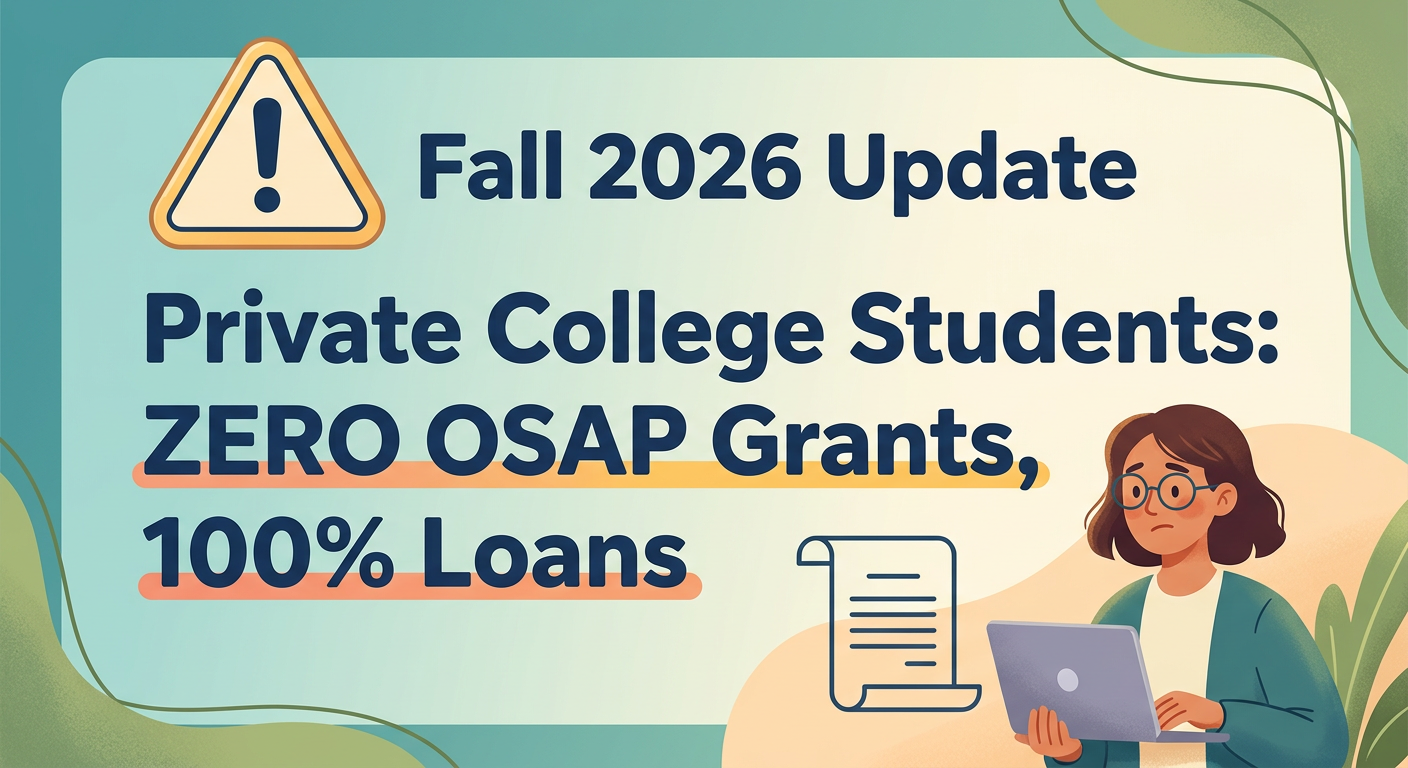
And there’s a new factor that changes everything for 2026: starting in Fall 2026, private career college students will receive zero OSAP grants. Every single dollar of OSAP funding for PCC programs is now a loan. No free money. No non-repayable grants. If you borrow $13,500, you owe $13,500 — plus interest.
Imagine budgeting for a program assuming half your funding would be grants — money you’d never have to repay — and discovering, after you’ve already started, that every dollar is debt you’ll be servicing for years. That’s not a hypothetical. That’s Fall 2026 for anyone enrolling at a private career college in Ontario.
In my honest opinion, school selection is now the single most important financial decision you’ll make this year. The right school puts you in a career that can support the debt. The wrong one leaves you with payments you can’t make and nothing to show for it.
5 Insider Checks Before You Enrol at Any OSAP Approved School
1. Run the Designation Audit — Don’t Just Ask, Verify
Most people walk into an admissions office and ask, “Do you take OSAP?” The admissions advisor says yes, and that’s the end of the inquiry. I’ve seen that conversation go wrong too many times to count.
Here’s the process I follow every single time — and I recommend you do the same, whether you’re applying to my college or anyone else’s:
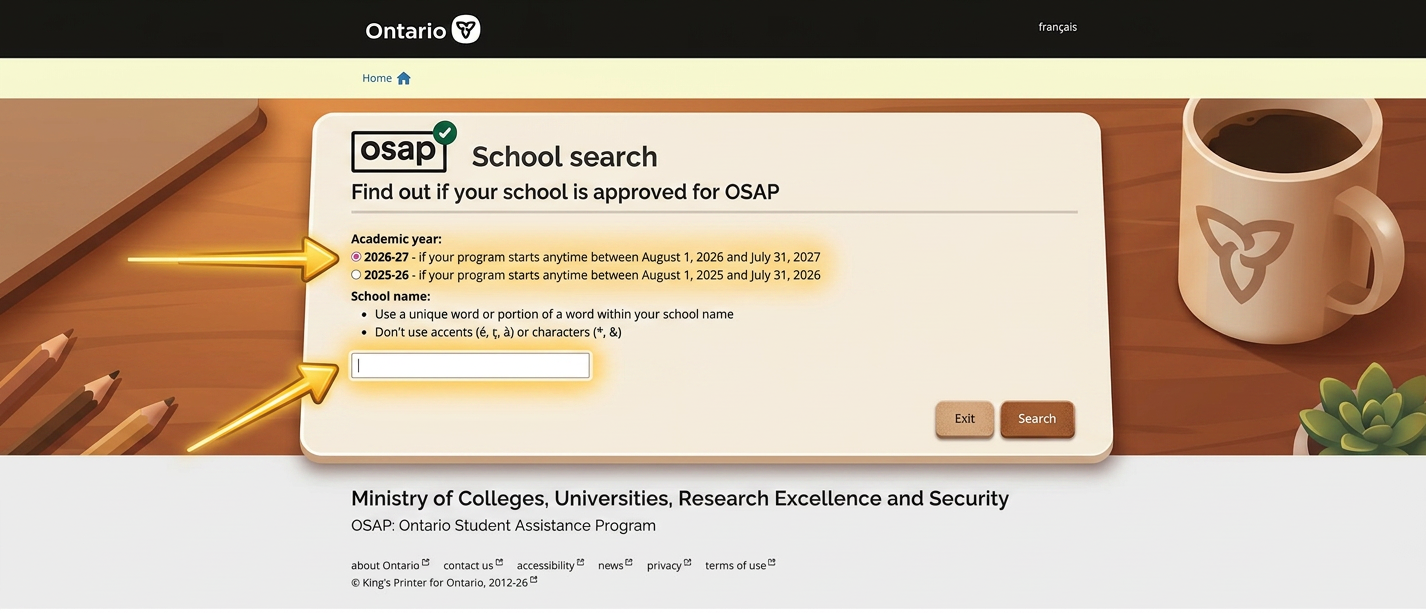
- Use the official OSAP School Search Tool. Select the academic year you plan to start. Enter the school name exactly. If it doesn’t appear in the results, OSAP won’t fund it — full stop. No exceptions. No “we’re in the process of getting approved.” The tool is the final word.
- Verify your specific program, not just the school. Ask the financial aid office for the exact program name as it’s registered in the OSAP system, then confirm it yourself. A school being approved and your program being approved are two separate things.
- Check the Ministry’s violations and enforcement page. If the college has been fined, had conditions placed on its licence, or faced enforcement action, it’s listed here. Most applicants never even know this page exists.
- Verify the school is registered at ServiceOntario’s PCC registry. Registration and OSAP approval are different designations. You want both.
One more thing most guides won’t warn you about: a school can be fully OSAP approved when you enrol and lose that approval while you’re still studying. It happened at BizTech College in Mississauga — the Ministry froze their OSAP access in June 2025 mid-dispute, leaving students mid-program with no clear path forward. This is rare, but it’s real. Which is why the next four checks matter just as much as this one.
2. Do the Graduate Reality Check
Never ask the school for references. They will give you handpicked success stories and you will walk out feeling great. That feeling is not data.
Here’s what I do instead:
- Search LinkedIn for people who list the program on their profile. Send a short message: “I’m considering this program. Knowing what you know now, would you do it again?” You’d be surprised how many people reply — and how honest they are when there’s no admissions officer in the room.
- Look up the school on Indeed company reviews, Google reviews, and Facebook. Scroll past the 5-star ratings — read the 1, 2, and 3-star reviews specifically. That’s where the unfiltered information lives.
- Call a company that hires for the job you want. Ask directly: “Do you recognize graduates from [school name]? Have you hired any?” If they’ve never heard of the school, you have your answer.
3. Ask the One Question Nobody Thinks to Ask: “What’s Your Default Rate?”
The OSAP loan default rate is the single most revealing number about any private career college — and almost nobody knows to ask for it.
The Ontario average for PCCs is 20.6%. Any school north of 15% means a significant portion of graduates aren’t earning enough to repay their loans, which usually means they aren’t finding relevant work. Above 25%, and you’re looking at a school where 1 in 4 graduates is in serious financial trouble.
Early in my career, I didn’t know this number existed. I evaluated schools the way most people do — website, tour, friendly admissions person. Then I found the HEQCO report, and it changed how I assess every institution. The default rate tells you more about a school than any brochure, tour, or sales pitch ever will.
You may not find this number published publicly for every school. So ask the admissions officer directly: “What’s your institution’s OSAP loan default rate?” If they hesitate, deflect, or say they don’t know — that is your answer. A school that stands behind its outcomes has this number ready.
4. Use the 2-Day Cooling-Off Window Like a Weapon
Under Ontario’s Private Career Colleges Act, 2005, you have two business days after signing an enrolment contract to cancel and receive a full refund. Almost nobody knows this exists. The schools certainly don’t mention it.
Here’s what I tell every student I work with: sign if you feel pressured to, but treat those 48 hours as your investigation window. Re-read the entire contract with fresh eyes. Google every single claim the admissions person made. Call the Ministry to confirm the school’s standing. If anything — anything — doesn’t check out, cancel.
You don’t need to give a reason. You don’t need to have an awkward conversation. You have a legal right to walk away.
5. Take the “Everest Test”
In 2015, Everest College shut down all 14 of its Ontario campuses with no warning. Three thousand students were stranded mid-program. Some graduates couldn’t even get their diplomas because nobody was left to issue them. One graduate, Sandor Mozes, told the Windsor Star he owed over $30,000 in OSAP debt and still couldn’t find a full-time job years later: “I wasted two years of my life. I’m not going to get that back.”
Before you enrol anywhere, ask this question: “If this school closed tomorrow, what would happen to me?”
The answer should include a reference to the Training Completion Assurance Fund — which currently holds $14.2 million specifically to protect students at registered PCCs — plus a clear description of how you’d either finish your program elsewhere or receive a refund. If the answer is vague, defensive, or dismissive, walk away. Everest’s students trusted that everything would be fine. They were wrong.
Exactly What to Say When You Call Admissions
Most people freeze when it’s time to ask hard questions. You’re sitting across from a friendly admissions advisor who just spent 20 minutes telling you about their great programs, and now you’re supposed to cross-examine them.
Use these exact words. Read them off your phone if you need to:
“Before I sign anything, I need you to confirm three things in writing:
One — your OSAP institution designation number for the [2025-26 / 2026-27] academic year.
Two — that my specific program, [insert program name], is individually designated for OSAP funding, not just the school.
Three — your most recent OSAP loan default rate.
If you can’t provide these today, that’s fine — I’ll verify directly with the Ministry and follow up.”
A legitimate school will answer all three without hesitation. A school that hesitates, deflects, or gets defensive is telling you something. Listen.
5 Mistakes That Cost Students Years and Thousands
Mistake 1: Trusting the School’s Word Without Checking
I once had a student say to me, “They seemed so professional. The office was nice. They had a website. I thought that meant it was real.” She’d enrolled at a school that verbally claimed OSAP approval — and it wasn’t true. By the time she realized what had happened, she’d already paid $2,500 toward a program OSAP wouldn’t touch.
The feeling: It’s not just the money. It’s the shame of having been taken. You feel stupid for believing them, and that feeling sticks around a lot longer than the financial loss does. You end up blaming yourself more than you blame the school that lied to you.
The fix: The OSAP School Search Tool takes 90 seconds to use. If the school isn’t there, it’s not approved. No exceptions, no excuses, no “we’re working on it.” If it’s not on the list, walk.
Mistake 2: Signing the Enrolment Contract Without Reading It
I get why this happens. You’ve been stuck for so long — stuck in a job you hate, stuck without a career, stuck watching other people move forward while you stay in place. Then someone slides a paper across the desk and says, “Just sign here and you can start in two weeks.” You sign because you don’t want to seem difficult. You sign because you want this so badly. You sign because you’re afraid that if you hesitate, the door will close.
Later — sometimes weeks later — you re-read the contract and see what you missed. The refund policy that’s stricter than what the admissions person described. The fees that weren’t mentioned verbally. The program start date that doesn’t match what you were told. By then, the 2-day window is gone.
The feeling: A queasy mix of embarrassment, resentment, and self-directed anger. A student once told me, “I just wanted to start. I was so tired of being stuck. Now I’m locked in and I have nobody to blame but myself.”
The fix: Under Ontario law, your enrolment contract must include: total fees in Canadian dollars, start and end dates, the refund policy, the complaint procedure, and the expulsion policy. If any of these are missing, the school is already in violation of the Private Career Colleges Act. And remember: you have 2 business days to cancel for a full refund, no questions asked.
Mistake 3: Choosing Based on Convenience Instead of Outcomes
The school was close to home. The program was short — under a year. They accepted her application the same day she applied. Everything felt easy. She graduated, celebrated, and started applying for jobs. A year later, she was still applying. Two years later, she owed $30,000 in OSAP debt and was working the same type of retail job she’d had before she enrolled.
As Sandor Mozes told the Windsor Star after his own experience at a private career college: “I wasted two years of my life. I’m not going to get that back. I’m not going to get this money back.”
The fix: Research employment outcomes before you ever set foot in an admissions office. Contact employers directly. Ask if they recognize the school. Ask if they’ve hired graduates. If you can’t find anyone working in the field who came from that program, you won’t be the exception.
Mistake 4: Not Knowing About the Fall 2026 OSAP Changes
Starting in Fall 2026, the Ontario government eliminated all OSAP grants for private career college students, as reported by SPS Canada. What used to be a mix of free grants and repayable loans is now 100% loans — every single dollar.
I’ve already spoken to students who planned their enrolment based on last year’s OSAP estimates. One woman had budgeted for a $14,000 program expecting roughly $8,000 in grants. She found out about the change from me — not from the school she was about to sign with — and had to completely rethink her decision.
The feeling: It’s not just disappointment. It’s the feeling of having the ground shift underneath you after you’d already mapped out your path. “I checked last year and it said I’d get grants. Nobody told me the rules changed.” The silence from institutions that should have warned her felt like a second betrayal.
The fix: For any program starting Fall 2026 or later, do your math assuming zero grants. If the program costs $14,000, assume you’re borrowing the full $14,000. Then ask yourself honestly: can the career this program leads to realistically support that debt load on an entry-level salary? If you’re not sure, find out before you sign.
Mistake 5: Ignoring the Red Flags Because You’re Desperate
This is the hardest one to write about, because I’ve seen it up close. Someone walks into an admissions office, and something feels wrong. The answers are too smooth. The promises are too big. The pressure to sign is too high. But they’ve been stuck for so long — in poverty, in a dead-end job, in a life that isn’t working — that they talk themselves out of their own instincts.
I’ve sat across from people who told me, weeks later, “I knew something felt off. But I wanted it so badly. I told myself I was being paranoid.” Those are the hardest conversations, because they’re not about what someone else did to them. They’re about the moment they stopped trusting themselves.
The fix: The Ontario Private Career Colleges Act makes certain claims flatly illegal. If a school tells you that you’re “guaranteed a job,” “guaranteed to graduate,” or “guaranteed visa approval” — they are breaking the law. That alone is disqualifying. You don’t need to investigate further. You don’t need to give them the benefit of the doubt. Walk.
FAQ: OSAP Approved Schools
How do I know if a school is actually OSAP approved?
Use the OSAP School Search Tool. Select the academic year you plan to start, enter the school name, and verify the result. Then confirm with the financial aid office that your specific program — not just the school — is individually designated for OSAP. If either the school or the program doesn’t appear, you won’t receive funding.
What happens if I enrol at a school that isn’t OSAP approved?
You won’t receive any OSAP funding for that program. If you’ve already paid tuition, you may not get it back unless you cancel within the 2-day cooling-off period. If the school misrepresented its OSAP status during enrolment, you can file a complaint with the Superintendent of Private Career Colleges.
How can I tell if a private career college is a diploma mill?
Check four things: (1) Is the school registered at the ServiceOntario PCC registry? (2) Is it listed in the OSAP School Search Tool? (3) Does it have enforcement actions or fines on the Ministry’s violations page? (4) Can you find graduates on LinkedIn who are actually working in the field? Red flags include: guaranteed job promises, high-pressure enrolment tactics, asking for more than $500 before you have a signed contract, and vague or evasive answers about accreditation or outcomes.
Is OSAP still giving grants for private career colleges in 2026?
No. Starting Fall 2026, private career college students receive zero OSAP grants. Every dollar of funding is now a loan that must be repaid. Public college and university students also faced significant grant reductions, but private career college students were hit hardest — elimination, not reduction.
What happens if my school loses OSAP approval while I’m still enrolled?
This is rare but real — it happened at BizTech College when the Ministry froze OSAP access mid-dispute in 2025. If this happens, contact the Ministry immediately. Your options depend on the circumstances, but you may be able to transfer to another OSAP-approved institution or pursue a refund through the Training Completion Assurance Fund. Document everything — communications, payments, and enrolment records — from day one.
What protects me if my college closes down entirely?
The Training Completion Assurance Fund (TCAF) covers students at registered private career colleges. If your school closes, TCAF can arrange for you to complete your program at another institution at no extra cost, or provide a refund for the unfinished portion of your program. You must file a claim within six months of the closure. This protection only applies to registered PCCs — unregistered schools offer zero protection and zero recourse.
Can I transfer to another OSAP approved school mid-program?
Yes, but it’s not automatic. You’ll need to confirm that the new school is OSAP approved for the program you’re transferring into, that your completed credits will transfer, and that your OSAP funding will follow you. Start by contacting the financial aid office at the school you want to transfer to — they can walk you through what’s possible. Don’t withdraw from your current program until you have a confirmed path forward. If you need help navigating the OSAP application process, read our step-by-step guide to applying without mistakes.
Final Thoughts: You Shouldn’t Have to Be the Detective
After reading all of this, you might be thinking: If I have to do this much work just to pick a school, is it even worth it?
That’s a fair question. And here’s my honest answer: the fact that you have to do this research at all is a failure of the system. You shouldn’t need to know what a default rate is. You shouldn’t need to check a Ministry violations page. You shouldn’t need to cold-message strangers on LinkedIn to ask if a school is legitimate. The government should be doing this filtering for you.
But they aren’t. Ontario has over 500 registered private career colleges, and the quality gap between the best and the worst is massive. The system won’t protect you from the bad ones — so you have to protect yourself.
Here’s the uncomfortable truth about my industry: there are excellent private career colleges in this province, and there are schools that will leave you worse off than when you started. The difference is not always obvious from the outside — which is exactly why every single one of the checks in this article exists.
I also know that doing all this research is exhausting when you’re already stretched thin. You’re working. You’re raising kids. You’re navigating a new country. You’re trying to build a future with limited time, limited money, and limited energy. Auditing default rates and searching LinkedIn profiles shouldn’t have to be your second job.
That’s the problem I try to solve. Every strategy I’ve laid out here applies to every OSAP approved school in Ontario — including the one I work for. Apply them to us. I mean that. I’d want you to. Because if a school can’t pass these five checks, you shouldn’t be there — and I’d rather you find that out in 15 minutes than in two years and $30,000 from now.
If you want to skip the detective work, we’ve already done it. Our college is fully registered with the Ministry, fully OSAP approved for every program we offer, and our graduates are working. Many of our students thought they wouldn’t qualify for OSAP — read how one student discovered she was wrong. The only question left is whether OSAP will fund you personally — and that’s something we can check in about 15 minutes, for free, with zero commitment.
If you qualify, great. If not, I’ll tell you honestly and point you toward a path that works. Either way, you’ll walk out knowing exactly where you stand — and that’s more than most people have when they sign.
Check your OSAP eligibility for free