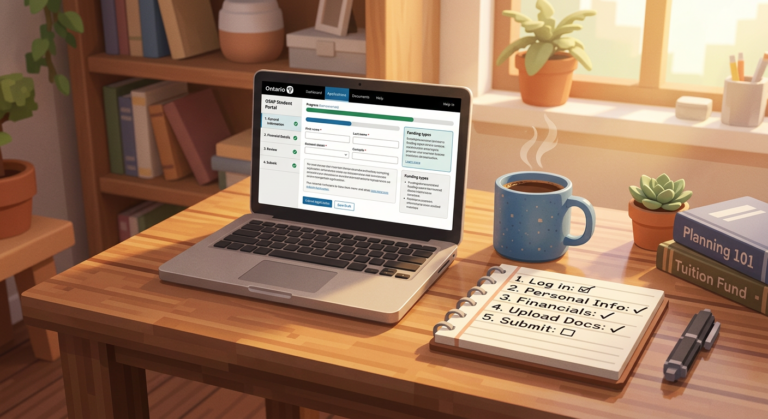
I remember the exact moment a student walked into my office and said, “I know I won’t qualify. I’m too old, my English isn’t good enough, and I’ve been out of work too long.” She was a single mom of two, working part-time at a grocery store, and she had already convinced herself that OSAP was for someone else — someone younger, someone with better credentials, someone who “had their life together.”
Three months later, she was enrolled in a college program with over $18,000 in funding. More than $12,000 of that was grants — money she never had to pay back. But what I didn’t tell you yet is what happened in between. She almost walked away three times. Once because an online estimator told her she’d get far less. Once because she couldn’t find her T1 from a year ago and wanted to give up. And once because her Employment Ontario case worker appointment took three weeks to schedule and she convinced herself the delay meant she wasn’t “supposed to” go.
I’ve seen some version of this story play out dozens of times. The biggest barrier to Second Career isn’t the eligibility rules or the paperwork. It’s the belief that people like you don’t get help — and then, when you do try, it’s the thousand small frustrations that make you want to quit before you start. I wrote this guide because I’m tired of watching people talk themselves out of funding that’s literally designed for them.
Here’s what nobody tells you about Second Career (now called Better Jobs Ontario): it’s not for the lucky ones. It’s for the people who need a second chance — single parents, laid-off workers, immigrants, and anyone who thought their chance to go back to school had passed. But getting from “I might qualify” to “the money is in my account” is a maze. This guide is the map I wish every student had before they walked through my door.
Table of Contents
- What Second Career (Better Jobs Ontario) Actually Is — and What Nobody Explains
- Why Most People Think They Don’t Qualify — and Why They’re Wrong
- The Real Numbers: What You Can Actually Get
- 5 Insider Strategies Nobody Tells You About
- 5 Common Mistakes That Get You Rejected (or Cost You Thousands)
- FAQ: Real Questions I Get Every Day — Answered Honestly
- Final Thoughts — and What to Do Next
What Second Career (Better Jobs Ontario) Actually Is — and What Nobody Explains
Let me clear up the biggest confusion first. In April 2022, the Ontario government renamed the Second Career program to Better Jobs Ontario. It’s the same program, but the eligibility expanded significantly. More on that in a moment.
Here’s the headline: Better Jobs Ontario covers up to $28,000 for programs under 52 weeks, or up to $35,000 for programs lasting up to two years, as detailed in the Ontario government’s official BJO guidelines. That includes tuition, books, supplies, transportation, and a living allowance of up to $500 per week. Childcare is separate. A laptop or tablet is separate. Disability supports are separate. These are add-ons, not subtractions — they don’t reduce your other funding.
The funding is a grant. You do not pay it back. I say this slowly to every student because most of them don’t believe me the first time.
Now, two things the official website won’t warn you about — and I learned both the frustrating way.
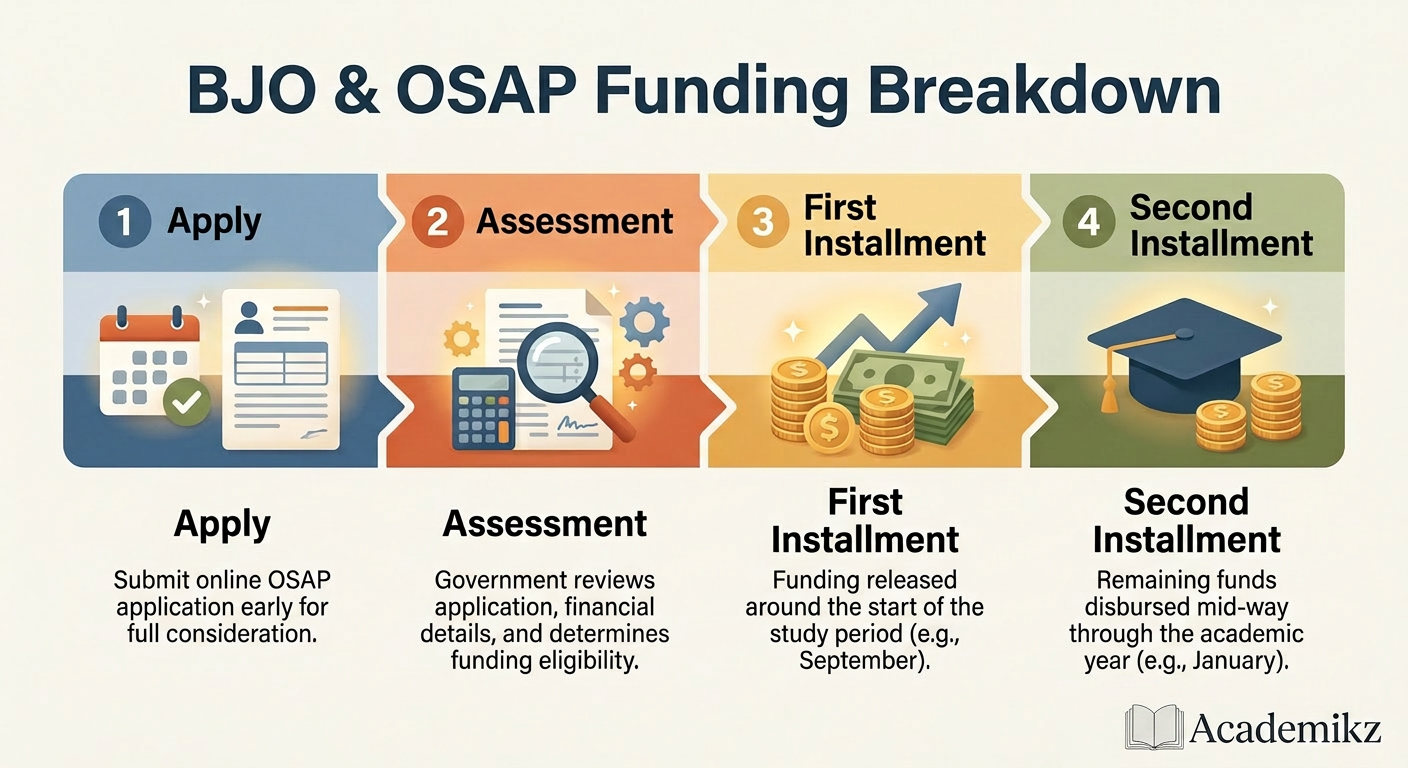
First: you cannot apply for Better Jobs Ontario on your own. Unlike OSAP, which you can submit online from your couch, BJO requires you to go through an Employment Ontario agency. You get assigned a case worker. That case worker reviews your situation, your training plan, and your chosen program before anything moves forward. I’ve seen students wait two to four weeks just to get a first appointment. The process is not instant, and nobody budgets for that waiting period.
Second: Better Jobs Ontario funding counts as a “resource” in your OSAP assessment. This is the part that makes people angry, and I understand why. You’d think BJO grants and OSAP would stack cleanly on top of each other. They don’t — not completely. BJO money shows up in your OSAP needs assessment as income or a resource, which means your OSAP offer will be lower than if you had no BJO at all. You still come out ahead overall — often by a lot — but the “stacking” is not as clean as “add both numbers together.” This is something I explain to every student upfront so they aren’t blindsided when the OSAP number looks smaller than expected.
But first, let me address the thing that stops most people before any of this even matters.
Why Most People Think They Don’t Qualify — and Why They’re Wrong
I hear the same objections over and over. Let me go through them one by one, because almost every time, the person is wrong about their own eligibility. I have been wrong about someone’s eligibility before — I once assumed a student on ODSP wouldn’t qualify for BJO, and I was completely mistaken. The program rules have changed more than most people realize.
“I wasn’t laid off — I quit my job” or “I’ve been out of work for different reasons.”
Since April 2022, Better Jobs Ontario no longer requires a layoff. If you’re part of a low-income household and have been unemployed for 12 weeks or more, you may qualify — even if you were never officially laid off. This opened the door for gig workers, self-employed people, newcomers, and social assistance recipients. You don’t need a termination letter. You just need to show you’re low-income and unemployed.
“I’m an immigrant — I probably don’t qualify.”
Permanent residents, protected persons, and certain CUAET visa holders with a 900-series SIN are eligible. I’ve helped newcomers who had been in Canada less than two years get full funding. Your immigration status is not an automatic disqualifier — the key is your SIN category. If your SIN starts with a 9, it depends on your specific visa type. If it’s a regular SIN (not starting with 9), you’re likely fine.
“I’m on Ontario Works or ODSP — they won’t let me.”
This is one of the biggest misconceptions I encounter. Receiving OW or ODSP makes you more eligible for Better Jobs Ontario, not less. The program specifically targets people facing barriers to employment. Plus, your Extended Health Benefit continues while you’re in training — you don’t lose your health coverage by becoming a student. I’ve had ODSP recipients break down crying when they learned they could keep their benefits AND get funded for school.
“I’m too old for this.”
The average student I work with is between 35 and 52 years old. This program is built for adults. There is no age cap. The oldest student I’ve helped was 61.
In my honest opinion, the eligibility criteria are far more flexible than most people realize. The government doesn’t do a great job of communicating that — especially to people whose first language isn’t English. That’s where people like me come in.
The Real Numbers: What You Can Actually Get
Let me give you concrete examples from actual students I’ve worked with — names changed, numbers real. But I want to go beyond just the final dollar amount. I want to show you what the process actually felt like for them, because that part matters.
Maria, single mom of two: Enrolled in a 40-week healthcare program. She came to me after being told by someone at a different agency that she “probably wouldn’t get much.” Total combined funding: $23,432 in Better Jobs Ontario grants. But here’s what the numbers don’t show: Maria cried three times during the process. Once when she couldn’t find her previous year’s notice of assessment. Once when OSAP initially offered her only $9,000 in grants. And once when the final approval letter came and she realized she was actually going to be okay.
Ahmed, 45-year-old laid-off warehouse worker: Enrolled in a 36-week IT program. Received $14,100 through Better Jobs Ontario. Covered tuition, laptop, transportation, and a $400/week living allowance. The hardest part for Ahmed wasn’t the money — it was convincing himself that a “guy like him” could learn IT at 45. He had never used a computer beyond basic email before enrolling. He graduated last year and is employed full-time.
Lin, PR holder, in Canada for 1.5 years: Enrolled in a 48-week business program. Total combined funding: $22,800. She was shocked — she had assumed PRs “wouldn’t get anything close to what citizens get.” Her biggest hurdle was documentation: she had to provide proof of income from her home country, translated and notarized. That part took almost a month. But once the paperwork was in, the funding came through.
The amount you receive depends on your specific situation: income, number of dependents, program length, and additional needs like childcare or transportation. But I can tell you this from experience: the number is almost always higher than what people expect — and the hardest part is almost never the money. It’s the paperwork, the waiting, and the self-doubt.
5 Insider Strategies Nobody Tells You About
Strategy 1: Stack Better Jobs Ontario and OSAP — But Understand the Offset
This is the single biggest “secret” I share with every student. Better Jobs Ontario is not instead of OSAP — you can get both. The correct order is: apply for Better Jobs Ontario first (grant money, no repayment), then apply for OSAP to cover whatever BJO doesn’t.
But — and this is the nuance that matters — BJO funding will show up as a resource on your OSAP assessment, which reduces your OSAP offer. This does not mean stacking isn’t worth it. It absolutely is. Even with the offset, students who use both programs consistently receive more total funding than those who pick just one. In my experience, students who only take one program leave anywhere from $5,000 to $15,000 unclaimed. Just go in with your eyes open: the final number is a net gain, not a simple addition.
Strategy 2: Find an Employment Ontario Agency That Actually Moves — and Be Ready for the Wait
I mentioned earlier that BJO requires an Employment Ontario case worker. What I didn’t say is that not all EO agencies are equal. Some move fast. Some have waitlists that stretch over a month. Some case workers know the BJO program inside out. Others know very little and will give you outdated information from the pre-2022 Second Career era.
Here’s my practical advice: call more than one EO agency. Ask directly how long their intake wait is. If one says “two weeks” and another says “six weeks,” you know where to go. Also, prepare your documents before the first meeting — your notice of assessment, your record of employment (if you have one), proof of any social assistance, and identification. Walking into that first appointment with your paperwork already organized saves weeks.
When I help students through this process, I always tell them: the waiting period is the most dangerous part. That’s when self-doubt creeps in. That’s when people talk themselves out of it. Plan for the wait. Expect it. Don’t let it convince you the answer is no before you’ve even gotten one.
Strategy 3: Appeal Every Assessment — Twice If You Have To
The first OSAP offer is rarely the final number. I’ve seen students get an initial assessment of $7,000 — then, after a reassessment that properly accounted for their dependents and living situation, receive over $13,000. The key is knowing what triggers a reassessment: change in income, dependent status, disability-related expenses, or exceptional transportation costs. Call your school’s financial aid office first. If that doesn’t work, call OSAP directly. Do not accept the first number as final.
I once helped a student appeal three times. First offer: $5,800. Second (after dependent correction): $9,200. Third (after living cost allowance submission): $13,400. She nearly stopped after the first offer because she thought that was “just what she got.” It wasn’t.
Strategy 4: Claim Every Additional Expense — They Will Not Volunteer This Information
Beyond tuition, Better Jobs Ontario covers: transportation (even if you drive your own car), childcare, disability supports, a laptop or tablet, and living expenses if you need to live away from home for training. I had a student who was commuting 80 km round-trip daily — she had no idea her gas and vehicle maintenance could be partially reimbursed until we submitted the claim. She received an extra $2,800 for that academic year.
There’s also something called the Training Access Payment — a smaller upfront payment that can be released before your program starts, meant to cover immediate needs like a bus pass or basic supplies for your first week. Most students have never heard of it because nobody mentions it unless you ask.
Strategy 5: Lock in the Current OSAP Grant Ratio Before Fall 2026 — This Is Urgent
This is the one that genuinely keeps me up at night for anyone who’s hesitating. Starting Fall 2026, the OSAP grant-to-loan ratio changes dramatically — from roughly 85% grants to 25% grants, as documented by Centennial College’s official OSAP changes FAQ. A student who gets $17,000 in grant funding today would receive only about $5,000 in grants after the change, with the remaining $12,000 becoming repayable debt.
Mature students, single parents, and low-income learners are projected to be the hardest hit, as CBC News reported in their coverage of the cuts. If you start your program in the 2025-26 academic year, you lock in the current grant-heavy structure for your entire program. Waiting until Fall 2026 could cost you over $10,000 in additional loans — real debt you’ll carry for years.
I cannot stress this enough: the window is closing. Every month you wait to start is a month closer to that 75% loan reality.
5 Common Mistakes That Get You Rejected (or Cost You Thousands)
Mistake 1: Trusting the OSAP Online Estimator
I’ve made a version of this mistake myself. Early in my career, I told a student to use the OSAP estimator as a planning number. He came back with the estimator’s number — around $13,900 for two semesters — and we built his budget around it. Rent, groceries, transportation, all calculated. When his actual offer came through, it was $7,000. Barely enough for tuition. He had already committed to his program and spent two frantic weeks trying to bridge the gap.
The feeling: I felt irresponsible — like I should have known better than to trust the tool. He felt betrayed. He told me, “I did everything they asked and they gave me half. I feel like the system set me up to fail.” I still think about that conversation.
The fix: Never make financial decisions based on the estimator alone. Complete the full application, see your real offer, and only then commit to a program. If the number is too low, appeal immediately. We run every student through a realistic funding projection based on actual data from previous students in similar situations — not an online calculator.
Mistake 2: Missing the Dependent Declaration — Losing Thousands
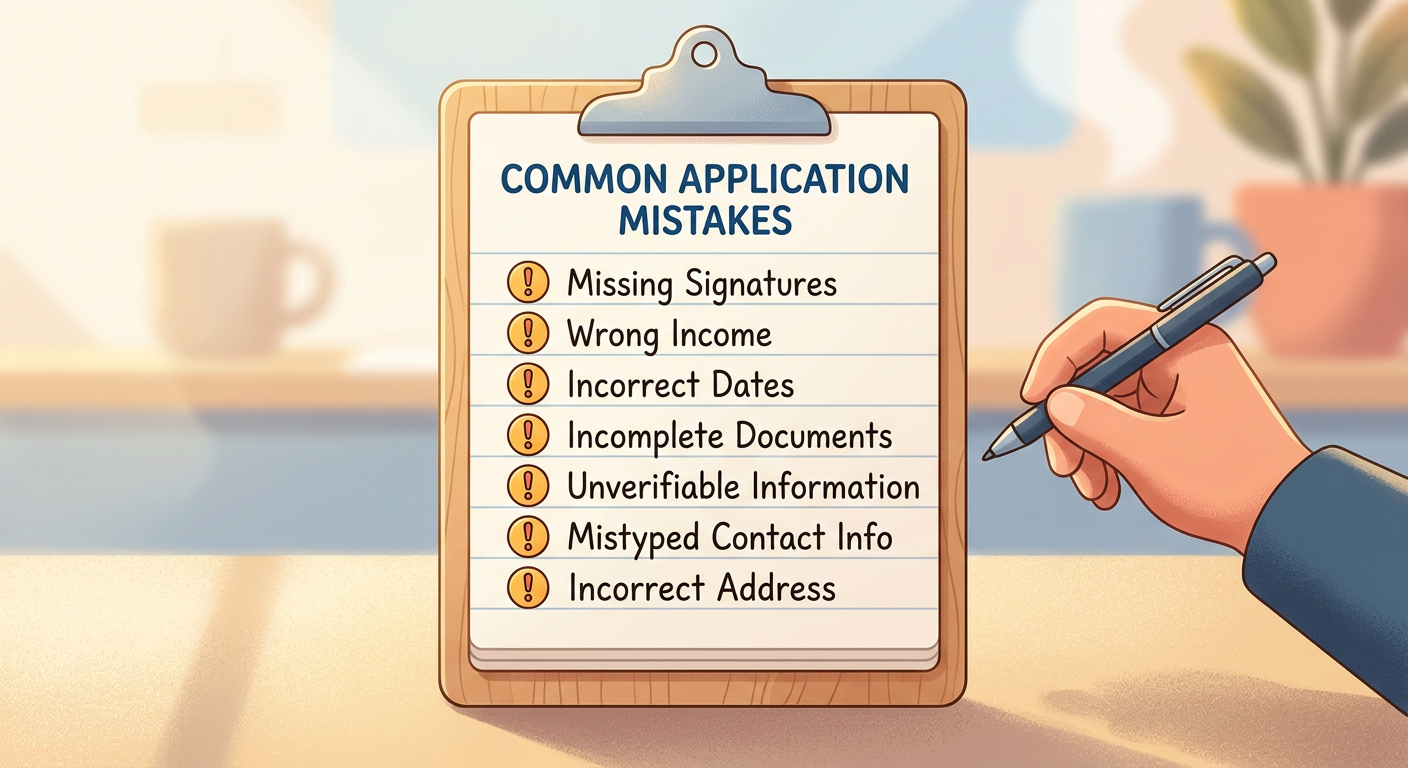
I cannot count how many students have come to me after submitting their OSAP application, only to realize they didn’t properly declare their children as dependents. The form asks about dependents in a way that’s easy to misinterpret — especially if English isn’t your first language. One single father I worked with skipped a field labelled “other dependants” because he thought it meant “other” as in “not your own children.” He lost nearly $6,000 in grants that year.
The feeling: Regret mixed with anger. “If someone had just translated that one field for me, I would’ve checked the box. Now I have to wait an entire year to fix something that took me three seconds to get wrong.”
The fix: Dependents include your children under 22 (or over 22 if they have a disability, or enrolled in full-time studies ), and in some cases, parents or relatives you financially support. Review every dependent-related field with someone who knows the system. One missed checkbox can cost you thousands. We walk every student through these fields before submission — it takes ten minutes and can mean a five-figure difference.
Mistake 3: Waiting Until the Deadline Has Passed — and the Self-Doubt Spiral
This is the most common and most heartbreaking mistake. People are unsure, they hesitate, they tell themselves “I’ll figure it out next month” — and then the intake window closes. But the deadline itself isn’t the real enemy. The real enemy is what happens during the waiting.
Here’s what I’ve observed over and over: a person gets excited about the possibility of going back to school. They start researching. Then they hit a confusing form, or a wait time, or someone in their life tells them it’s a bad idea. The excitement fades. Self-doubt fills the gap. A month passes. Then another. Then they’re telling themselves “maybe next year” — and next year becomes never.
The feeling: I had one student tell me, “I do this every time. I wait, I overthink, and then it’s too late. I feel like I’m never going to actually change my life.” That’s not laziness. That’s self-doubt disguised as procrastination.
The fix: Different colleges and programs have different intake dates and funding deadlines. Some programs start every two months, not just September and January. We map out the fastest available start date for your situation so you don’t lose months waiting. But more importantly — have someone in your corner during the waiting period. The silence between steps is where people quit.
Mistake 4: Choosing a Program That Isn’t Approved — and Finding Out Too Late
I’ve met people who enrolled in a program, paid a deposit, bought supplies, told their family — and only then discovered the school or course wasn’t OSAP-approved or didn’t meet Better Jobs Ontario’s “in-demand occupation” criteria. One woman had already quit her part-time job to make room for classes. She had to either forfeit her deposit and start over, or pay $15,000 out of pocket with no income.
The feeling: Trapped and humiliated. She told me, “I told everyone I was going back to school. My kids were so proud. Now I have to tell them I can’t go — because I picked the wrong school.”
The fix: Verify OSAP and BJO approval before you enrol — not after. Ask the school directly: “Is this specific program approved for OSAP funding? Is it approved for Better Jobs Ontario?” Get the answer in writing. Every college program we offer is pre-approved for both, so you never have to wonder.
Mistake 5: Thinking Second Career Is Only for Laid-Off Factory Workers — and Never Applying
This is the mistake that costs nothing in dollars but everything in lost years. I constantly meet people who heard about Second Career a decade ago, back when it was a narrower program for manufacturing layoffs, and they never checked again. They don’t know the program was renamed Better Jobs Ontario in 2022 and expanded to cover low-income unemployed individuals, newcomers, gig workers, and social assistance recipients. They self-eliminate before they even make a phone call.
The feeling: This one is different from the others. It’s not anger or panic. It’s a quiet, settled resignation — the belief that “these things aren’t for people like me.” When I tell someone they actually qualify, after they’ve spent years assuming they didn’t, the most common reaction isn’t excitement. It’s silence. Then: “Are you sure?”
The fix: If you’ve been unemployed or underemployed and you have a low household income, check your eligibility. Don’t assume. The program was redesigned in 2022 specifically to include people who were previously excluded — and most of them still don’t know.
FAQ: Real Questions I Get Every Day — Answered Honestly
Can I get both Better Jobs Ontario and OSAP at the same time?
A question I get at least three times a week. Yes, you can — but understand the mechanics. Better Jobs Ontario is applied first and provides a non-repayable grant. OSAP is applied second. However, BJO funding will appear as a resource on your OSAP needs assessment, which means your OSAP offer will be lower than if you had no BJO. The net result is still significantly more total funding than either program alone. In practice, students I work with who use both programs typically see $25,000 to $35,000+ in combined funding, with the majority coming from the BJO grant side.
How much can a single parent actually get?
I’ve seen single parents receive anywhere from $18,000 to over $30,000 in combined BJO and OSAP funding, depending on number of children, program length, and additional needs like transportation or disability costs. The childcare component is handled separately and does not reduce your other funding — this is important and frequently misunderstood. Over 60% of the total package is typically non-repayable. I’ve also seen single parents get less than they should because they didn’t know to claim childcare separately. Don’t make that mistake.
What’s actually changing with OSAP in 2026? Should I rush?
Yes, you should rush — but not panic. Starting Fall 2026, OSAP shifts from roughly 85% grants to 25% grants, with the rest becoming repayable Canada-Ontario Integrated Student Loans. A student who receives $17,000 in grants today would get roughly $5,000 in grants under the new formula, with $12,000 in repayable debt. The change applies to study periods starting August 1, 2026 or later. If you start in 2025-26, you lock in the current grant-heavy ratio for the duration of your program. Mature students, single parents, and low-income learners are expected to be hit hardest. My honest advice: if you’re on the fence, get off it. The financial difference between starting now and starting next year could be five figures in additional debt.
I was already denied for BJO or OSAP — is it worth trying again?
Yes, and I’ve seen denials overturned more times than I can count. Common reasons for initial denial: incomplete documentation, income calculated just above the low-income threshold, a training plan that wasn’t detailed enough, or the case worker applying outdated pre-2022 criteria. A revised application with proper supporting documents, a clearer training plan, and a case worker who understands the current program rules often succeeds on the second attempt. I’ve also seen students get denied by one EO agency and approved by another. Do not treat the first “no” as final.
Do immigrants and permanent residents actually qualify?
Yes — permanent residents, protected persons (refugees), and CUAET emergency travel visa holders with a 900-series SIN are eligible for both OSAP and Better Jobs Ontario. Canadian citizens are eligible. International students on study permits are not. I’ve worked with PRs who had been in Canada less than two years and received full funding. The key is your SIN category and your immigration status documentation. If you’re unsure, the only real way to know is to have someone knowledgeable check your specific situation. Don’t self-eliminate based on a guess.

Final Thoughts — and What to Do Next
I’ve spent years helping people navigate OSAP and Better Jobs Ontario, and here’s what I know to be true: the people who succeed aren’t the ones with the cleanest paperwork or the most straightforward work histories. They’re the ones who didn’t let the confusion, the waiting, or the self-doubt make the final decision for them.
The funding exists. The eligibility is broader than you think. But there are real friction points — the Employment Ontario wait times, the BJO-OSAP offset, the estimator that lies to you, the forms with fields that are easy to misinterpret — and those friction points are designed in a way that weeds out people who don’t have someone helping them. That’s not fair. But it’s the reality.
And the 2026 grant cut is not a distant problem. Every month you wait to start pushes you closer to a system where most of your “help” comes as a loan you’ll carry for years. That window is closing.
If you’re still reading this, you’re serious about changing something. The next step isn’t filling out a 40-page application by yourself, cold-calling Employment Ontario agencies, or trying to decode government eligibility tables. It’s a conversation — about your situation, what programs you qualify for, what numbers you can realistically expect, and whether this makes sense for you right now.
It’s free. There’s no obligation. You’ll walk away knowing a real number, not a guess from an online tool that’s burned people before.
We’ve helped single parents who cried in our office because they thought they had no options. We’ve helped laid-off workers in their fifties who hadn’t written a resume in twenty years. We’ve helped newcomers who were told by someone else that they “probably don’t qualify.” Most of them are working in their new fields now. Most of them started exactly where you are — not sure, not confident, half-convinced the answer would be no.
It wasn’t.